

Fullness Isn’t Failure: Why Feeling Full Can Actually Mean You Did It Right
Have you ever finished a meal, felt perfectly satisfied, and then immediately thought, “Ugh… I overdid it”?
Maybe it was a big salad with chicken and potatoes. Maybe it was a smoothie loaded with fruit, greens, and protein powder. Nothing dramatic — just a normal, nourishing meal. Yet somehow, the moment fullness kicks in, guilt sneaks in right behind it.
If that sounds familiar, you’re not alone. So many women (and men) have been trained to equate fullness with failure, as if the simple act of feeling comfortably satisfied is a sign they’ve lost control or done something wrong.
But here’s the truth:
Fullness ≠ failure.
Fullness is not a moral issue. It’s not a sign you “blew your diet,” and It’s not a reflection of your willpower or worth.
Fullness is simply a body sensation — a neutral signal that your stomach has expanded to accommodate food volume, fiber, protein, or even water. That’s all it is.
When we step away from diet rules and the judgments that are often attached to that sensation, fullness becomes easier to understand. At its core, it’s a piece of information your body uses to help regulate energy, digestion, and appetite.
Let’s look at fullness through that biological, practical lens.

What Fullness Really Means (and What It Doesn’t)
Fullness is governed by a beautifully complex interplay of nerves, hormones, and digestive mechanics. When you eat, your stomach expands and stretch receptors send signals through the vagus nerve. Your gut then releases hormones like:
GLP-1, which slows digestion and promotes satiety
CCK, which signals satisfaction
Peptide YY (PYY), which helps regulate appetite
Reduced ghrelin, your hunger hormone
Your brain receives all this information and says, “We’re all set for now.”
This is simply how the body works – a natural and expected response to eating.
Yet many people have learned to interpret fullness as something negative. Messages about restricting food, or staying “in control” can easily make fullness feel like something to avoid instead of a normal physiological cue.
Because of this conditioning, fullness may feel unfamiliar or uncomfortable at times. If you’ve been conditioned to associate eating less with success, noticing fullness can bring up mixed feelings — even when nothing is actually wrong.
But fullness should not be concerning. It’s a normal physiological process that supports energy, hormone balance, blood sugar regulation, and overall well-being.
Your body actually functions best when you allow yourself to feel full.
The Science of Fiber and Satiety
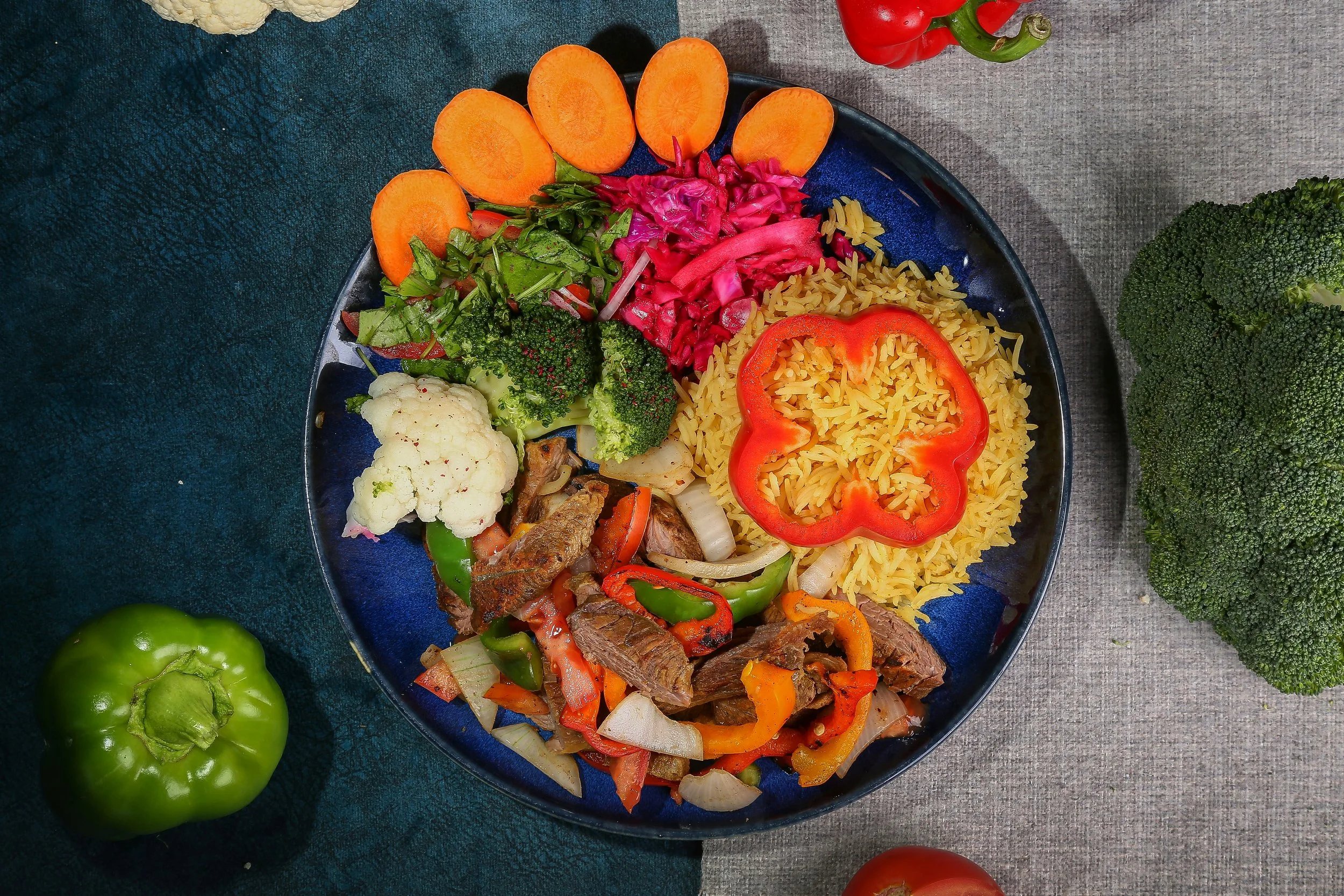
One of the most common reasons people feel full — even without overeating — is fiber.
Fiber plays a powerful role in fullness and satiety because it:
Adds volume without adding many calories
High-fiber foods like vegetables, beans, fruits, and legumes physically take up space in the stomach.
This activates stretch receptors that trigger fullness — even though the caloric content is moderate.
Slows digestion
Soluble fiber forms a gel-like texture in the gut, helping food move more gradually through the digestive tract.
This supports longer-lasting fullness and steadier blood sugar levels.
Increases satiety hormones
Fiber stimulates the release of:
GLP-1
PYY
CCK
These hormones help you feel satisfied after a meal.
Prevents the “bottomless pit” feeling
Meals low in fiber (like snack foods, sweets, or refined carbohydrates) move quickly through the stomach and small intestine — meaning fullness fades rapidly and cravings show up soon after.
When your meal contains fiber + protein + healthy fats + carbohydrates, your fullness becomes steady, predictable and long-lasting.
This means:
Feeling full after a fiber-rich, nutrient-dense meal is not overeating – it’s your physiology working exactly as it should.
Fullness vs. Overeating: Whe They’re Not the Same
This distinction is essential.
People often assume that if they feel full, they must have over eaten. But these two experiences are very different.
Fullness
A temporary, physical sensation.
Your stomach expanded to accommodate the volume of your meal — maybe lots of veggies, lean protein, potatoes, broth, beans, or a smoothie.
You can feel full and still be perfectly within your body’s calorie and macro needs.
This is especially true when meals are rich in fiber, because fiber creates a sense of fullness with far fewer calories.
Overeating
A pattern — not a moment.
Overeating means consistently taking in more energy than your body needs. And you may not feel physically full when overeating if the foods are very calorie-dense (like nut butter, oils, pastries, or snacks).
This is why:
You can feel very full after a giant bowl of veggies and protein and still be in a calorie deficit.
You can eat spoonfuls of peanut butter and not feel full at all but exceed your needs by hundreds of calories.
Fullness reflects volume.
Overeating reflects energy intake over time.
These two cues are not the same.
Why So Many People Fear Fullness
Several factors shape how we interpret fullness:
Diet Culture
Messaging around shrinking, restricting, and controlling food intake makes fullness feel “unsafe.”
Chronic under-eating
If you’ve been undereating, normal fullness may feel exaggerated or unfamiliar.
Hormone fluctuations
Estrogen, progesterone, cortisol, and insulin all influence hunger and fullness cues — especially during:
PMS
Perimenopause
Menopause
High stress
Lack of quality sleep
You might feel hungrier one day and fuller the next purely because your hormones are doing their job.
Emotional conditioning
Many people learned early in life to ignore or suppress appetite.
Past dieting cycles
Repeated dieting can dull or distort hunger and fullness signals.
Fullness is not the issue.
The meaning you’ve been taught to attach to it is.

Pairing Body Cues With Gentle Data
Rebuilding trust with food is most effective when intuition and information work together.
Ask yourself:
Was my meal balanced?
Did it include:
Protein
Fiber
Healthy fats
A source of carbohydrates
A balanced meal should keep you full for 3 – 4 hours.
Was the fullness sudden or gradual?
Sudden fullness may indicate:
Eating too quickly
Stress
Blood sugar swings
Gradual fullness is a normal satiety response.
How long did the fullness last?
If you’re hungry again within an hour, it’s likely not overeating — it’s under-fueling.
Do I feel steady, satisfied, and energized?
If the answer is yes, that fullness is a sign you did things right.
The Hormone Side of Fullness
Fullness cues are shaped by many factors, including:
Insulin: Stabilizes blood sugar and helps prevent cravings
Cortisol: High stress can delay fullness signals or trigger emotional hunger
Progesterone: Can increase appetite and cravings in the luteal (PMS) phase
GLP-1 and CCK: Released in response to protein, fiber, and fat to help promote satiety
Your hunger and fullness fluctuate because you’re human — not because you’re “failing.”
A Healthy Relationship With Fullness
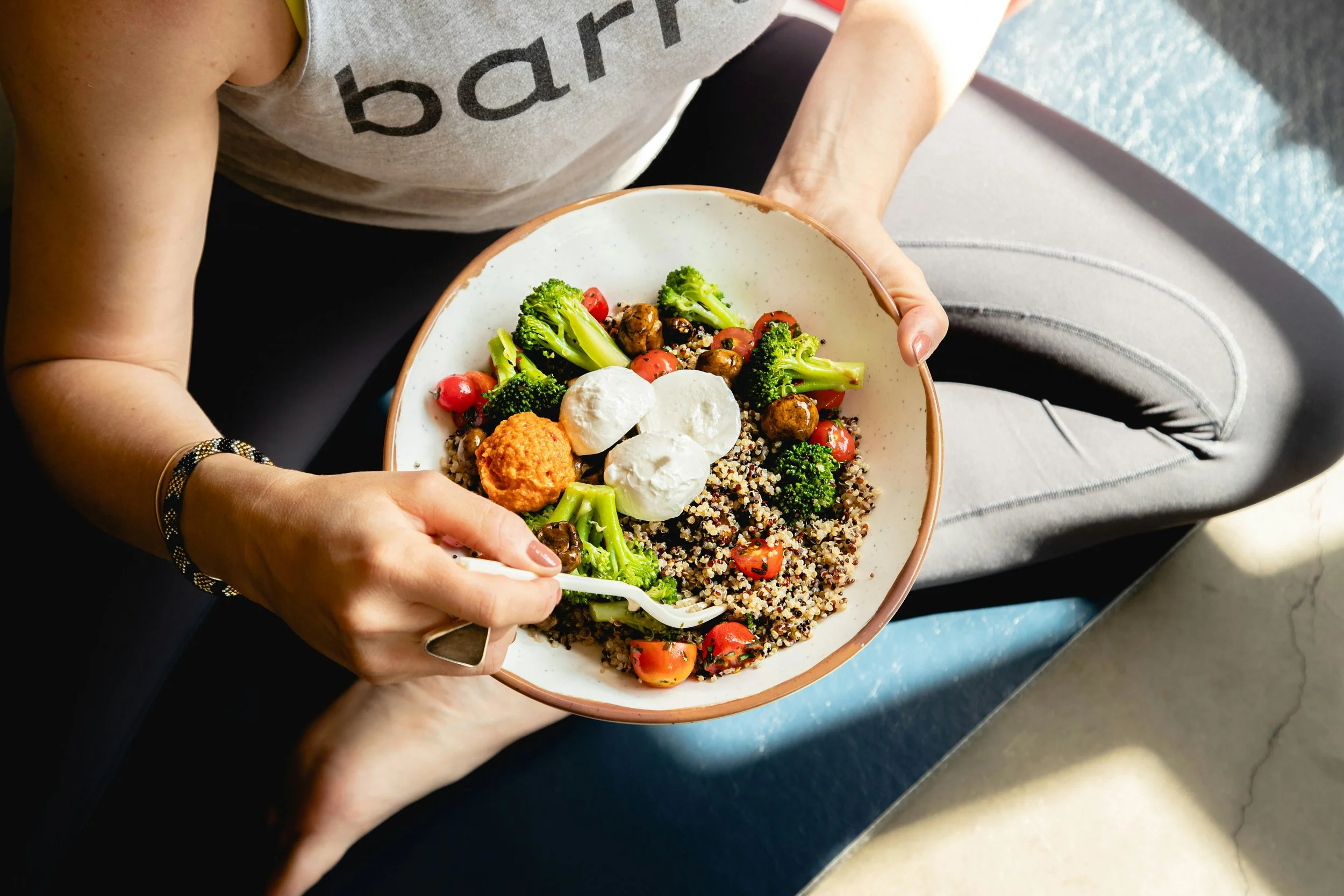
A healthy fullness feels:
Warm
Grounded
Calm
Stable
Energized
Nourishing
It does not feel:
Shameful
Anxious
Out of control
Wrong
Dangerous
Those emotions come from conditioning — not biology.
The Bottom Line: Fullness is Allowed
The next time you finish a meal and feel that wave of fullness, pause before judging it.
Ask:
Do I feel steady? Satisfied? Nourished? Clear-headed?
If yes, then that fullness is a sign your body got exactly what it needed.
You didn’t mess up.
You didn’t “overdo it.”
You didn’t fail.
You actually did it right.
If You Want Support Rebuilding Your Fullness Cues
At GreenMind Health, we help clients rebuild trust with their bodies by tuning into hunger, fullness, emotional patterns, and personalized nutrition needs — without unnecessary rules or guilt.
If you’re tired of second-guessing your hunger signals and feeling uneasy after normal meals, we’re here to help you reconnect with your body cues and eat with confidence.
Ready to feel steady and at peace with food again?
Schedule a Discovery Call to explore whether personalized nutrition support may be right for you.
Sources
Barakat, G. M., Ramadan, W., Assi, G., & El Khoury, N. B. (2024). Satiety: A gut–brain relationship. Journal of Physiological Sciences, 74, Article 9. https://doi.org/10.1186/s12576-024-00904-9
Clarke, G. S., Page, A. J., & Eldeghaidy, S. (2024). The gut–brain axis in appetite, satiety, food intake, and eating behavior: Insights from animal models and human studies. Pharmacology Research & Perspectives, 12(5), e70027. https://doi.org/10.1002/prp2.70027
Dagbasi, A., Byrne, C., Blunt, D., Serrano-Contreras, J. I., Becker, G. F., Blanco, J. M., Camuzeaux, S., Chambers, E., Danckert, N., et al. (2024). Diet shapes the metabolite profile in the intact human ileum, which affects PYY release. Science Translational Medicine, 16(752), adm8132. https://doi.org/10.1126/scitranslmed.adm8132
Ignot-Gutiérrez, A., Villanueva-Bernabéu, E., Haro-Sandoval, E. R., Gomez-Mercado, D., & Montoro-Huguet, L. (2024). Proteins and peptides from food sources affecting satiety: A narrative review. Nutrients, 16(20), 3560. https://doi.org/10.3390/nu16203560
Li, S., Liu, M., Cao, S., Liu, B., Li, D., Wang, Z., Sun, H., Shi, Y., & Shi, Y. (2023). The mechanism of the gut–brain axis in regulating food intake. Nutrients, 15(17), 3728. https://www.ncbi.nlm.nih.gov/pmc/articles/PMC10490484/
Rakha, A., Talsma, E. F., & Mandal, R. (2022). Insights into the constellating drivers of satiety impacting food’s satiating efficiency: A narrative review. Frontiers in Nutrition, 9, 915950. https://www.ncbi.nlm.nih.gov/pmc/articles/PMC9549911/