

GLP-1s Are Working — So Why Is Your Recovery Off?
Something about this just feels off.
The scale is moving, and your appetite feels more regulated. On paper, everything looks like it’s working the way it should. But underneath that progress, something is just slightly off.
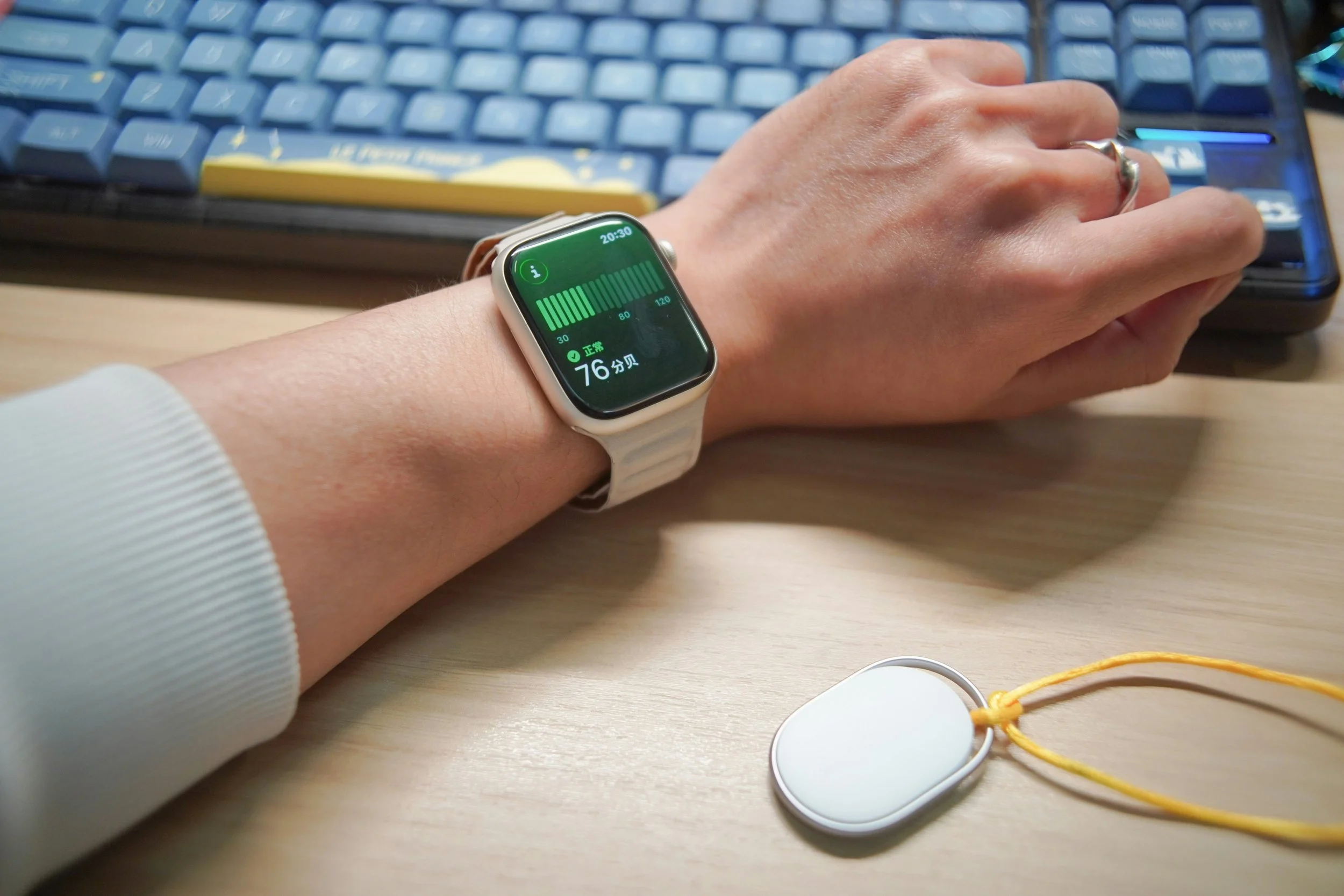
Your sleep score is lower than usual.
Your resting heart rate has crept up.
Your recovery isn’t where you expected it to be.
Nothing feels drastically wrong. But it also doesn’t feel as good as you thought it would. And you can’t quite explain why.
Nothing about yesterday seemed that different. You ate well, didn’t overdo it, even went to bed earlier than usual. By all accounts, it should have been a good recovery day.
But your body doesn’t seem to agree.
Or maybe you notice it mid-workout – you're moving, but something feels flat. Like you're going through the motions instead of actually recovering from them.
It’s subtle, but it’s enough to make you wonder what you might be missing.

When Progress and Physiology Don’t Match
At a glance, everything seems to be working the way it should. And in many ways it is.
GLP-1 medications are doing what they’re designed to do. They help regulate appetite, improve blood sugar control, and support weight loss, and for many people, they do this effectively and relatively quickly.
Which is exactly why this disconnect can feel confusing.
Because progress is happening. But your physiology isn’t quite keeping pace with it.
What you’re noticing isn’t random, it’s your body adapting. It’s often adjusting to a new internal environment – one where appetite, intake, and energy availability have all shifted.
GLP-1s naturally reduce how much you eat. And while that can be helpful, it also means your body may be taking in less total energy, protein, fluids, and electrolytes than it actually needs to support recovery.
At the same time, your body is still being asked to function, perform, and adapt.
When those two things don’t match, what your body needs versus what it’s receiving, you start to see it show up in subtle ways first.
Sleep feels lighter or less restorative.
Heart rate trends upward.
Recovery feels slower.
Energy feels just a bit more depleted than expected.
Not because anything is “going wrong,” but because something is slightly out of alignment.
Even Subtle Doses Still Shift Your Physiology
It’s easy to assume that a lower dose, or a microdose, where someone starts with a very small amount to ease in gradually, means minimal impact.
But even subtle shifts in appetite, digestion, and hormonal signaling can influence how your body regulates energy, hydration, and recovery.
You may not notice dramatic changes in how you feel day to day.
But your body is still adjusting, whether you notice it or not.
And over time, those smaller shifts can still show up in patterns like:
Slight changes in sleep quality
Slower recovery
Increased physiological stress
Not because the dose is “too much,” but because the support hasn’t been adjusted to match it.
What’s Often Missing: Hydration and Electrolytes
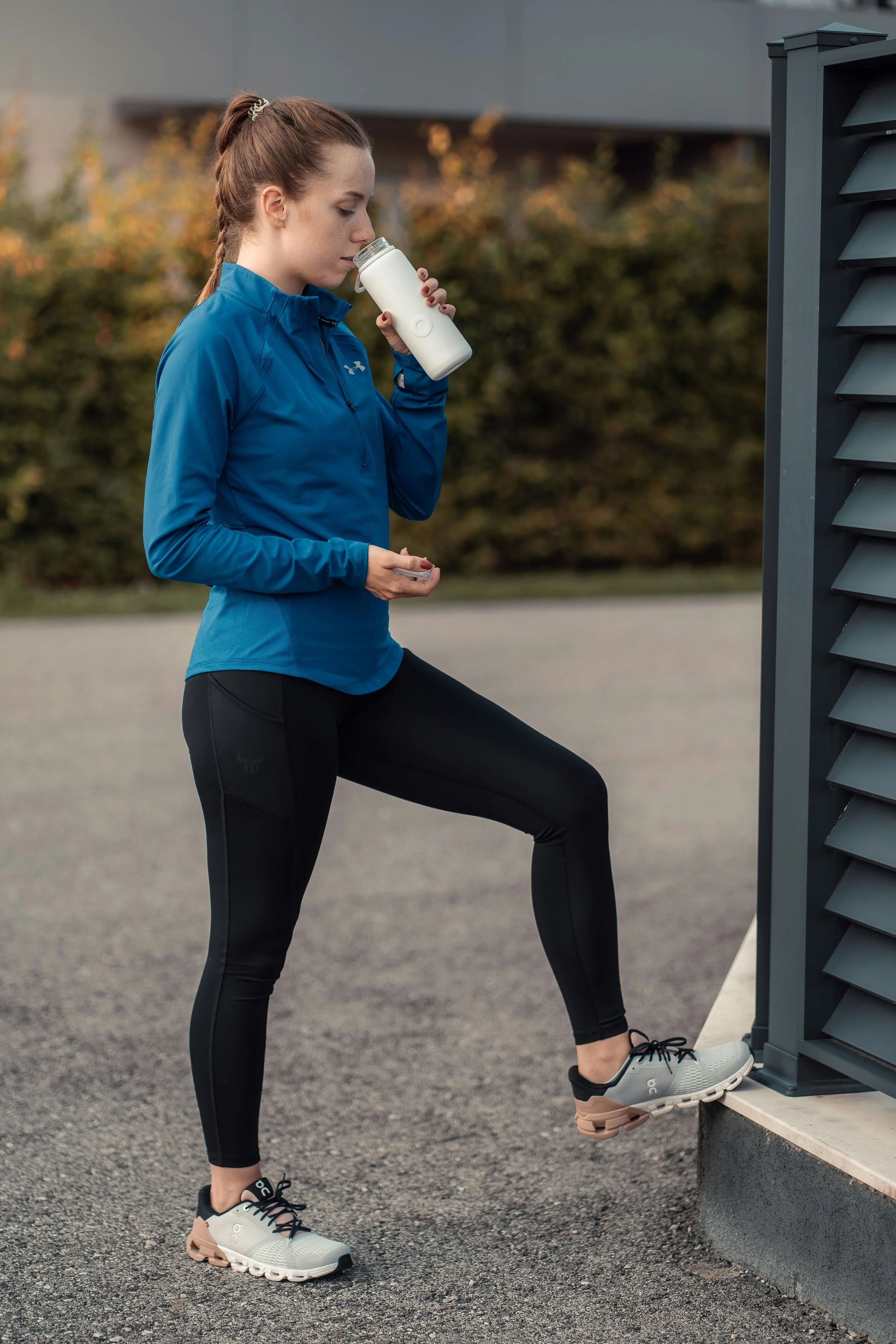
One of the most common pieces that gets overlooked here is hydration, but not just in the way most people think about it.
Because this isn’t simply about drinking more water alone.
GLP-1s reduce appetite, which often means you’re eating less overall. And with that, you’re not just taking in fewer calories, you’re also taking in fewer electrolytes (especially sodium) and, critically, less protein.
At the same time, many people increase their water intake, trying to stay ahead of dehydration.
But without adequate electrolytes to match it, that balance can shift even further.
And that’s where the body starts to compensate.
Electrolytes play a central role in nervous system function, circulation, and cellular hydration. When those levels drop (even slightly) your body may respond by increasing stress signaling to maintain balance.
Which can show up as:
Elevated resting heart rate
Lower HRV
Lighter, less restorative sleep
Slower recovery
Not because something is going wrong, but because something isn’t being fully supported.
The Protein Piece Matters More Than You Think
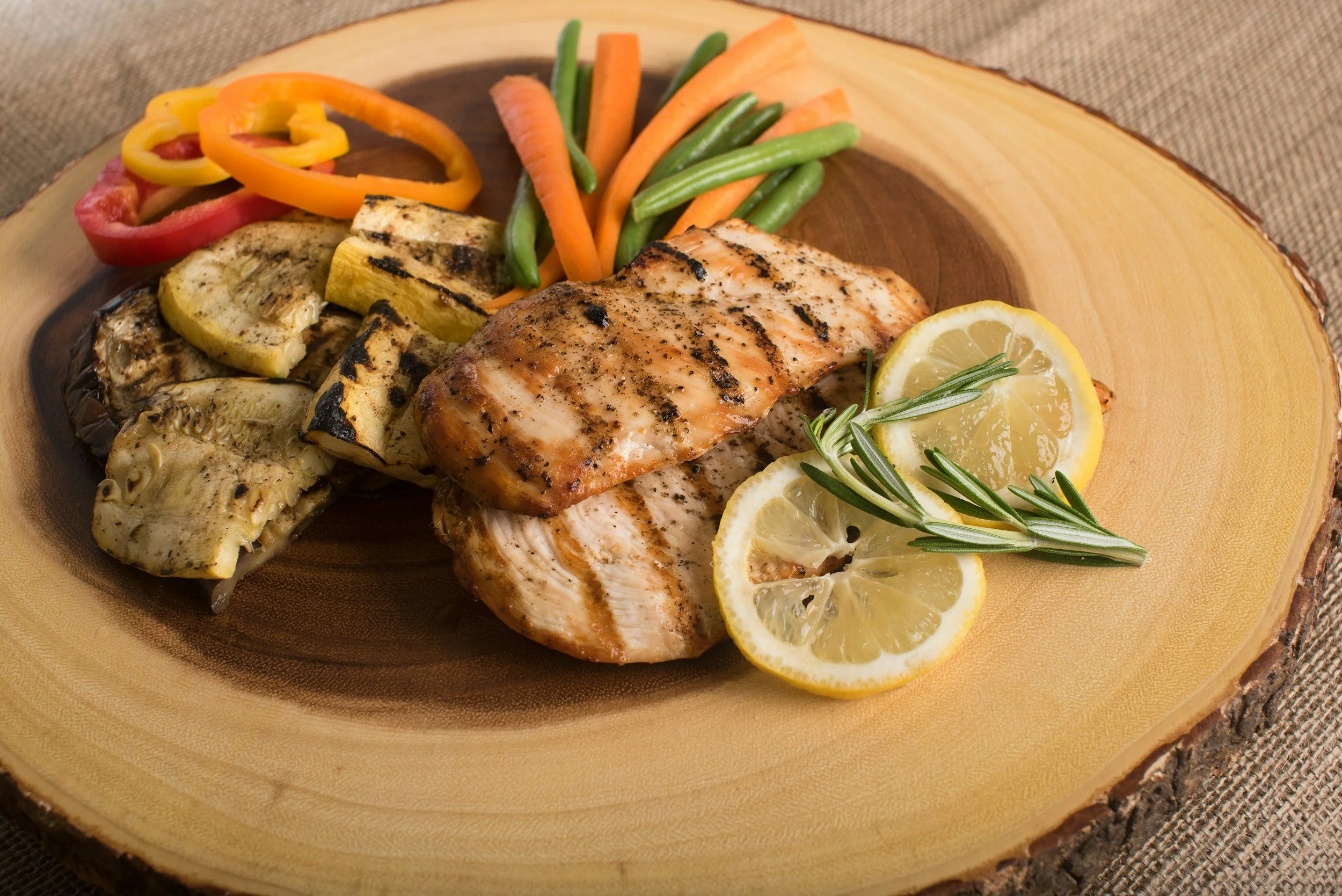
And then there’s protein, which deserves its own attention here.
When appetite drops, protein is often the first macronutrient to fall short. But your body’s need for it hasn’t changed. In fact, during a period of weight loss, your need for protein may actually increase because your body requires adequate amino acids to preserve lean muscle while losing fat.
Without enough protein, recovery slows, muscle breakdown can accelerate, and the composition of weight you’re losing may shift in ways that don’t serve you long-term.
This is one of the most talked-about concerns in the GLP-1 conversation, and for good reason. The goal isn’t just to lose weight. It’s to lose the right kind of weight, while keeping the muscle and metabolic function that support you going forward.
Why a One-Size Approach Falls Short
This is also where a one-size approach tends to fall short.
Two people can be on the same medication, eating similar foods, and seeing similar changes on the scale, but have completely different experiences when it comes to energy, recovery, and overall physiology.
Because what matters most isn’t just what the plan looks like on paper. It’s how your body is responding to it.
And more importantly, whether those signals are being adjusted for.
Looking at the Full Picture
When you step back and look at the full picture, this is where things start to come together.
The goal isn’t to overhaul everything. It’s to notice the patterns and make targeted adjustments that bring things back into balance.
That might mean supporting hydration and electrolyte intake more intentionally.
It might mean prioritizing protein to protect lean mass and support recovery.
Or simply closing small gaps in overall intake that add up over time.
Not to override what’s already working, but to support it more effectively.
If This Feels Familiar
If this feels familiar, you’re not the only one noticing it.
If you’re on a GLP-1 and something feels slightly off, even if things are technically “working,” it’s common for these shifts to fly under the radar at first, especially when progress is happening in other ways.
But they matter, because how you feel, how you recover, and how your body adapts over time are just as important as what the scale is doing.
Paying attention to those signals isn’t overthinking it. It’s awareness.
And in many cases, it’s the missing piece that allows your progress to feel as good as it looks.
If you’re starting to notice these patterns and want a clearer picture of what your body is telling you, this is exactly where a more individualized approach can be helpful.
A More Complete Goal
Because the goal isn’t just the number on the scale.
It’s for your body to feel as good as that number looks.
And when those two things are aligned, that’s when progress becomes something you can actually sustain.
If you’re looking to better understand how your body is responding, and how to support it more effectively, book a free discovery call and let’s take a closer look together.
Sources
Andreasen, C. R., Andersen, A., Knop, F. K., & Vilsbøll, T. (2021). How glucagon-like peptide 1 receptor agonists work. Endocrine Connections, 10(7), R200–R212. https://doi.org/10.1530/EC-21-0130
Capó, X., Martorell, M., Ferrer, M. D., Sureda, A., Pons, V., Domingo, J. C., Drobnic, F., Martínez-Rodríguez, A., Leyva-Vela, B., Sarabia, J. M., Herranz-López, M., Roche, E., Tur, J. A., & Pons, A. (2020). Calorie restriction improves physical performance and modulates the antioxidant and inflammatory responses to acute exercise. Nutrients, 12(4), 930. https://doi.org/10.3390/NU12040930
de Zambotti, M., Cellini, N., Goldstone, A., Colrain, I. M., & Baker, F. C. (2019). Wearable sleep technology in clinical and research settings. Medicine & Science in Sports & Exercise, 51(7), 1538–1557. https://doi.org/10.1249/MSS.0000000000001947
Liu, Q. K. (2024). Mechanisms of action and therapeutic applications of GLP-1 and dual GIP/GLP-1 receptor agonists. Frontiers in Endocrinology, 15, 1431292. https://doi.org/10.3389/FENDO.2024.1431292
Most, J., & Redman, L. M. (2020). Impact of calorie restriction on energy metabolism in humans. Experimental Gerontology, 133, 110875. https://doi.org/10.1016/J.EXGER.2020.110875
Skov, J. (2014). Effects of GLP-1 in the kidney. Reviews in Endocrine and Metabolic Disorders, 15(3), 197–207. https://doi.org/10.1007/S11154-014-9287-7