

Why Fiber Isn’t Fixing Your Constipation
Constipation is often treated as a simple problem with a simple solution: eat more fiber.
And in many cases, that works.
But for many people, it doesn’t fully resolve what’s going on.
You can increase fiber, clean up your diet, stay hydrated, and still feel like your digestion isn’t moving the way it should. Not dramatically off, but not quite right either.
Bowel movements may be less consistent. Or incomplete. Or just slower than expected.
Which raises a different question: What if this isn’t just about fiber?

When Increasing Fiber Doesn’t Change Much
There’s a version of this where increasing fiber works exactly the way it’s supposed to. Things improve, digestion becomes more regular, and your body responds quickly.
And then there’s the version that feels harder to explain. Where you increase fiber and instead of things improving, you just feel more full. Maybe more bloated. Like something isn’t moving the way it should.
This isn’t just anecdotal. Research on slow-transit constipation shows that fiber often fails to improve symptoms in this subgroup, and can actually worsen bloating and discomfort when motility is the underlying issue.
Fiber Supports Movement. It Doesn’t Create It
What often gets missed is that fiber doesn’t create movement. It depends on it.
Fiber can support digestion, but it relies on your body already being able to move things through your system effectively. And that process, gut motility, isn’t just about what you eat. It’s about how your body functions.
Your digestive system isn’t passive. It’s active, coordinated, and deeply connected to your nervous system. Every time you eat, there’s a sequence of signals and muscular contractions that move food from one stage to the next. When that rhythm is working well, you don’t really think about it. When it’s not, you start to notice.
If the issue is movement rather than input, adding more fiber is like adding more to a system that’s already backed up. It doesn’t solve the problem. It just adds more to manage

A Missing Piece: Nutrient Support for Motility
Gut motility depends heavily on the enteric nervous system, the network of neurons embedded in the walls of your digestive tract that coordinate muscular contractions and keep things moving. And that system depends on specific nutrients to function.
Vitamin B1, or thiamine, is one of the most important.
Thiamine plays a central role in energy production at the cellular level and is essential for nerve signaling, including the signals that tell smooth muscle in the digestive tract when to contract. Thiamine deficiency has long been linked to GI symptoms in conditions like beriberi, and emerging research continues to explore its role in digestive function, including pilot studies showing symptom improvements in IBD patients with normal blood thiamine levels who responded to high-dose supplementation.
When thiamine status is suboptimal, digestion doesn’t stop completely. It just slows down.
Subtly at first.
You might still be going regularly enough that it doesn’t seem like a major issue, but the rhythm is off.
Where Genetics Can Shift the Picture
This is where things can get more layered.
You can be eating well. You can be including foods that contain B1 and still feel like something isn’t fully clicking.
For some people, part of that disconnect comes down to how their body processes and utilizes certain nutrients. Not just what they’re taking in, but how effectively their body is activating and using it at the cellular level.
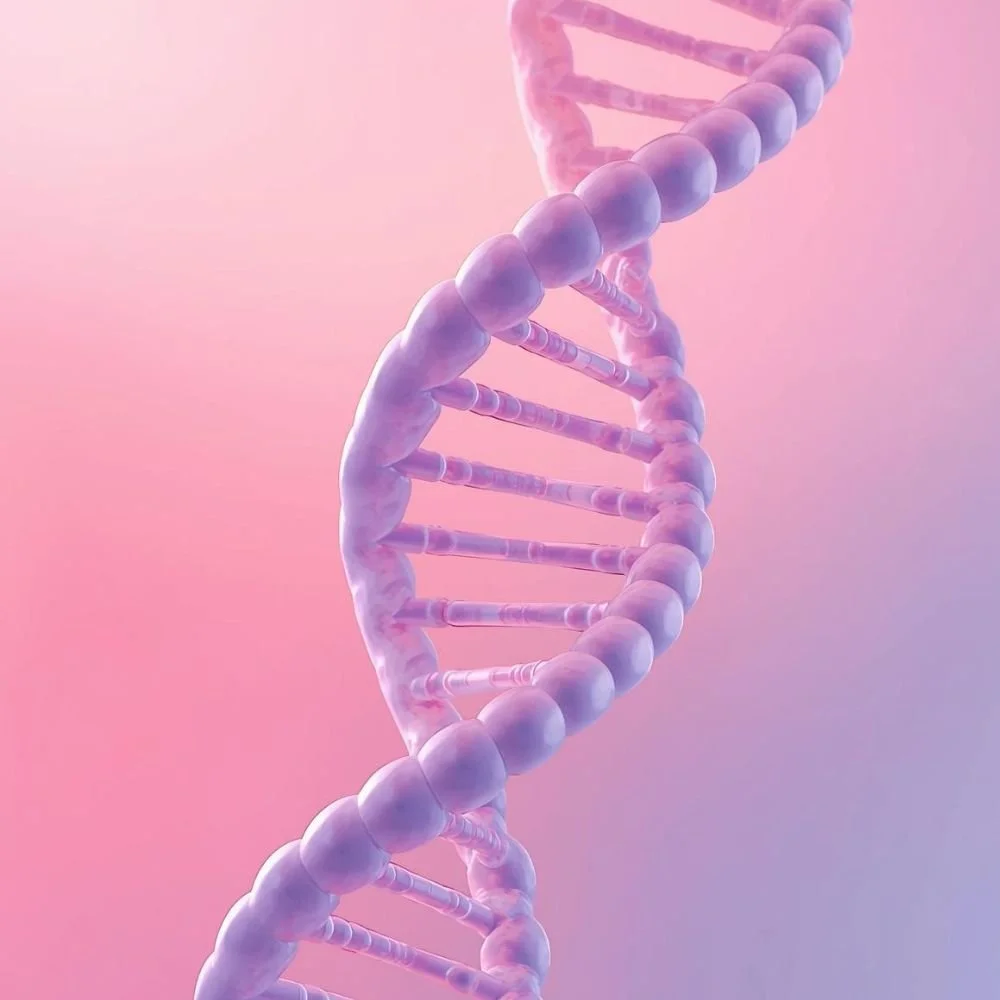
Genetic variations in thiamine transporter genes (SLC19A2 and SLC19A3) and in TPK1, the gene responsible for converting thiamine into its active form, can influence how efficiently thiamine gets where it needs to go. When those pathways aren’t working optimally, you can end up with functional gaps even when intake looks adequate on paper.
So instead of a lack of fiber, what you’re often seeing is a mismatch between what your body is receiving and what it’s able to do with it.
When It Starts to Make Sense
This doesn’t mean fiber isn’t important. It is.
But it works best when it’s supporting a system that’s already moving well, not trying to compensate for one that isn’t.
For a lot of people, this is the point where things start to make more sense. Why adding more didn’t fix it. Why symptoms felt inconsistent. Why it never quite felt resolved.
Not because anything was being done wrong. Just because the approach didn’t match what the body actually needed.
What This Actually Looks Like Clinically
When I’m working with someone whose digestion isn’t responding to the usual interventions, the assessment usually looks beyond intake:
Symptom patterns: How does digestion respond to stress, illness, travel, or periods of low energy? These are all situations that increase thiamine demand and can reveal underlying gaps.
Nutrient status: Functional markers that reflect how nutrients are actually being used at the cellular level, not just what’s circulating in the blood.
Genetic context: Variants that affect nutrient transport, activation, and utilization.
Motility assessment: Understanding whether the issue is transit time, coordination, or something else.
The goal isn’t to follow a protocol. It’s to understand what’s actually happening underneath the symptoms so the support can be specific to what your body needs.
If This Sounds Like You
If you’ve been doing the “right” things and still feel like your digestion isn’t working the way it should, you’re not missing willpower or discipline. You’re likely missing a piece of the picture.
That piece is usually worth looking at with someone who can help you connect the dots between symptoms, nutrient status, and how your body is actually functioning.
Ready to get clarity on what’s going on?
Book a consult call to talk through your symptoms and see if functional testing and a personalized plan make sense for you. These calls are the fastest way to move from guessing to a clear next step.
Not ready for a call yet?
Follow us on Instagram @greenmindhealth for clinical education on gut health, hormones, and the root-cause pieces most practitioners miss. New content every week.
Sources
Costantini, A., & Pala, M. I. (2013). Thiamine and fatigue in inflammatory bowel diseases: An open-label pilot study. Journal of Alternative and Complementary Medicine, 19(8), 704–708. https://doi.org/10.1089/acm.2011.0840
Ferguson, L. R. (2009). Nutrigenomics approaches to functional foods. Journal of the American Dietetic Association, 109(3), 452–458. HTTPS://DOI.ORG/10.1016/j.jada.2008.11.024
Lonsdale, D. (2006). A review of the biochemistry, metabolism and clinical benefits of thiamin(e) and its derivatives. Evidence-Based Complementary and Alternative Medicine, 3(1), 49–59. https://doi.org/10.1093/ecam/nek009
Labay, V., Raz, T., Baron, D., Mandel, H., Williams, H., Barrett, T., Szargel, R., McDonald, L., Shalata, A., Nosaka, K., Gregory, S., & Cohen, N. (1999). Mutations in SLC19A2 cause thiamine-responsive megaloblastic anaemia associated with diabetes mellitus and deafness. Nature Genetics, 22(3), 300–304. https://doi.org/10.1038/10372
Mayer, E. A. (2011). Gut feelings: The emerging biology of gut-brain communication. Nature Reviews Neuroscience, 12(8), 453–466. https://doi.org/10.1038/nrn3071
Müller-Lissner, S. A., Kamm, M. A., Scarpignato, C., & Wald, A. (2005). Myths and misconceptions about chronic constipation. American Journal of Gastroenterology, 100(1), 232–242. https://doi.org/10.1111/j.1572-0241.2005.40885.x
Ordovas, J. M., Ferguson, L. R., Tai, E. S., & Mathers, J. C. (2018). Personalised nutrition and health. BMJ, 361, k2173. https://doi.org/10.1136/bmj.k2173
Yang, J., Wang, H. P., Zhou, L., & Xu, C. F. (2012). Effect of dietary fiber on constipation: A meta-analysis. World Journal of Gastroenterology, 18(48), 7378–7383. https://doi.org/10.3748/wjg.v18.i48.7378